




Bird Laser Repellents
Bird laser repellents are the most modern and effective tool in active bird control. The moving green beam is perceived by birds as a physical threat, dispersing flocks immediately – day or night, indoor or outdoor. Browse the tested range below.
Showing all 7 results
 Bird Control for Docks, Marinas & Boats
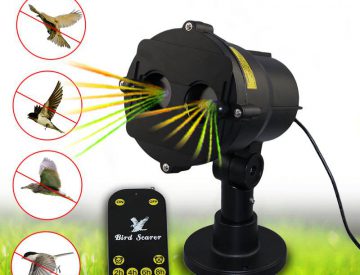
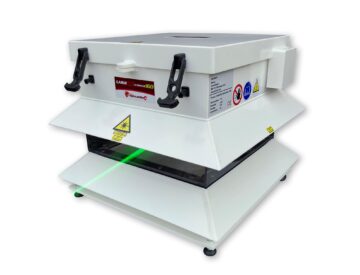
Laser Bird Repellent – Advanced Bird Scarer Laser with Remote Control
347.20€ -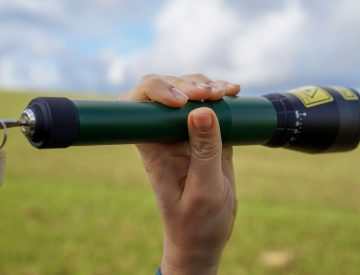
 Bird Control for Industrial Sites & Warehouses
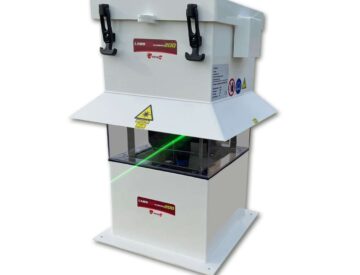
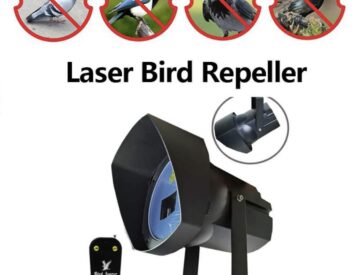
Laser bird deterrent for indoor and outdoor use with timer remote control
798.56€ -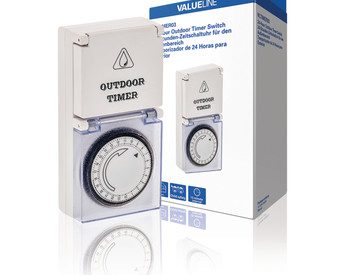
More about Bird Laser Repellents
Bird lasers are the most advanced active deterrent in modern bird control. A moving green laser beam, swept across an area in randomised patterns, is perceived by birds as a physical threat - they cannot tell the difference between a moving beam and a real predator approaching, so they leave the area immediately. Unlike sound deterrents, lasers do not create noise complaints; unlike visual decoys, birds cannot habituate. Bird laser repellents have become the standard tool for warehouses, airports, vineyards, harbours and any large open area where bird flocks need to be moved.
Bird laser repellents: how moving green light disperses flocks
Bird lasers are the most advanced active deterrent in modern bird control. A moving green laser beam, swept across an area in randomised patterns, is perceived by birds as a physical threat - they cannot tell the difference between a moving beam and a real predator approaching, so they leave the area immediately. Unlike sound deterrents, lasers do not create noise complaints; unlike visual decoys, birds cannot habituate. Bird laser repellents have become the standard tool for warehouses, airports, vineyards, harbours and any large open area where bird flocks need to be moved.
Why lasers work where other deterrents fail
Birds rely heavily on vision and process moving objects in their peripheral vision instinctively. A green laser beam (around 532 nm wavelength) is the most visible to bird vision because birds have heightened sensitivity to green light. When the beam moves rapidly, the bird cannot determine if it is a predator, a falling object, or anything else - the safe response is immediate flight. Crucially, birds do not habituate to lasers the way they do to static visual decoys, because each pass of the beam appears as a new threat from a different angle.
Automated vs handheld lasers
Automated bird lasers run on programmable schedules without operator intervention. They sweep predetermined patterns across the protected area, typically 24/7 in agricultural and industrial settings. Handheld lasers are operated by personnel who actively target arriving flocks - more labour-intensive but allows targeted dispersal of specific flocks. Automated systems dominate the commercial market because they handle large areas without ongoing labour, and they work especially well at dawn and dusk when bird activity peaks.
Indoor vs outdoor laser units
Indoor laser units are designed for warehouse interiors, hangars, food production halls and other enclosed spaces with bird intrusion through high openings or skylights. Reflective surfaces inside warehouses amplify the perceived threat from the beam. Outdoor units handle open areas - vineyard rows, fish farm ponds, harbour basins, runway approach zones, large flat roofs. Outdoor units are weatherproof and use higher power-class lasers because the beam needs to remain visible in daylight.
Eye safety and operating distance
Modern bird-control lasers are designed to be eye-safe at the operating distances they are installed for. Diffuse green beams have lower irradiance than focused medical or industrial lasers; they trigger bird flight responses without causing harm to bird eyes either. For human safety, automated units have configurable safety zones that prevent the beam from sweeping at human eye level in occupied areas. Always follow manufacturer installation height and exclusion-zone specifications.
Where bird lasers excel
- Warehouse interiors: indoor automated laser sweeping continuously, particularly effective at dawn and dusk.
- Airports: automated lasers as part of bird-strike prevention, especially in dawn/dusk periods of peak bird activity.
- Vineyards and orchards: outdoor lasers covering rows, working in dim light when audio scarers are disruptive to nearby residents.
- Fish farms and harbour basins: outdoor laser dispersing cormorants and gulls, especially active at dawn.
- Industrial flat roofs: automated laser as overnight backup to physical exclusion (spikes, Bird Spider).
- Landfills and waste-handling sites: dispersing gull and crow flocks attracted by exposed waste.
Common bird laser mistakes
- Expecting laser effect in bright midday sun - lasers work best in dim light, dawn, dusk and indoors.
- Mounting too low so the beam is blocked by foliage or equipment - install at proper height per manufacturer.
- Pointing the beam at human eye level in occupied areas - configure safety zones correctly.
- Using laser alone in extreme bird pressure - layer with bio-acoustic, netting or spikes for full protection.
- Skipping local aviation and laser-emission rules - airports require coordination with civil aviation authority.
Start with the right bird laser repeller
Whether warehouse interior, vineyard or harbour basin, the right automated bird laser exists. Browse the tested Bird Laser Repellents range below - automated outdoor lasers, indoor sweep units, handheld models and accessory mounts proven across European installations.
Yes. Modern green-beam bird lasers are highly effective for active flock dispersal, especially at dawn, dusk and indoors. Birds perceive the moving beam as a physical threat and leave immediately. Unlike static visual decoys, birds do not habituate to lasers because each beam pass appears as a new threat from a different angle. Lasers excel where audio is undesirable due to noise complaints.
Yes, when used per manufacturer specifications. Diffuse green beams used in commercial bird control are designed to be eye-safe at operating distances; they trigger bird flight responses without causing eye damage. Automated units have configurable safety zones that prevent the beam from sweeping at human eye level in occupied areas. Always follow installation-height and exclusion-zone specifications.
Bird lasers work best in low-light conditions - dawn, dusk, overcast days and indoors. The beam is highly visible to birds in dim light when their predator-detection systems are most sensitive. In bright midday sun the beam is less visible and effectiveness drops. For 24/7 protection, combine lasers with bio-acoustic devices that work effectively in daylight.
Yes, but with civil aviation authority coordination. Bird lasers are widely used at airports as part of bird-strike prevention programs, but airport installations require coordination with national aviation authorities to prevent any interference with pilot vision in approach corridors. Modern automated airport lasers have geofenced safety zones that automatically pause when aircraft are nearby.
Not entirely. Lasers are most effective as part of a layered approach: laser for active dispersal at dawn/dusk and overnight, bio-acoustic during daylight, netting and spikes for physical exclusion at landing surfaces. Layering prevents habituation and addresses different bird behaviours. Lasers are the strongest single tool for low-light hours but work best alongside other methods.
Yes. Bird laser repellents using diffuse green beams within commercial wavelength and power specifications are legal across the EU under wildlife and laser-safety regulations. Aviation contexts require coordination with national civil aviation authorities. National laws (BNatSchG in Germany, artskyddsförordningen in Sweden, etc.) classify them as humane non-lethal methods compliant with the EU Birds Directive (2009/147/EC).