




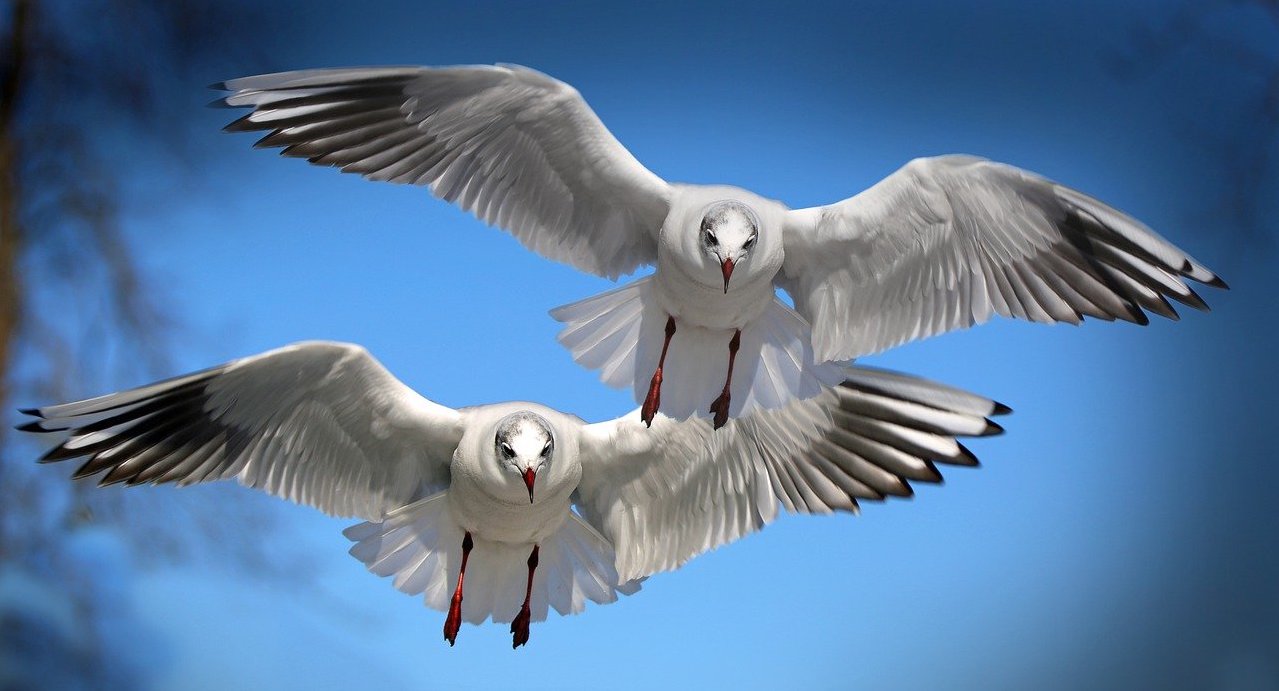
Few birds cause as much frustration around homes, terraces, restaurants and seaside towns as gulls. They scream at dawn, raid bins, dive on chips and leave droppings that corrode paintwork and roofing. If you have spent a season chasing them off, you already know that one trick rarely works. The honest answer to how to get rid of seagulls is that you need a layered approach: combine two or three methods, rotate them often, and remove what attracts the birds in the first place. Below are the seven most effective seagull deterrents used by professionals across Europe, and how to choose the right one for your situation.
Why Are Seagulls Suddenly a Problem?
Urban gull populations have grown dramatically over the last two decades. Coastal towns, inland cities and even airports report record nesting numbers. The reasons are simple — easy food (open bins, takeaway leftovers, dropped crisps), warm flat roofs that mimic cliffs and almost no urban predators. Once a pair nests on your roof, their offspring return year after year and bring partners. The earlier you intervene, the easier it is to break the cycle.
Are Seagulls Protected? What the Law Says
Yes — gulls are protected under wildlife legislation across the UK and the EU. In the UK, killing a seagull or destroying an active nest without a specific licence is illegal under the Wildlife and Countryside Act 1981, with fines up to £5,000 per offence and possible imprisonment. The same principle applies across Europe. This is why every method on this page is non-lethal. It is also more effective long term: kill a few birds and others move into the territory, but make the area unattractive and the entire flock relocates. Always start with humane deterrents.
1. Bio-acoustic Sound Deterrents (The Most Powerful Tool)
If you are dealing with a roost, the single most effective seagull noise deterrent is a bio-acoustic device that plays recorded gull distress calls and predator screams. When one bird hears another gull in panic, the entire flock leaves immediately, and the memory of “danger here” lasts for weeks. Modern units randomise calls, intervals and direction so the birds cannot habituate. A compact garden unit covers 1–2 hectares; commercial agricultural scarers reach 3–4 hectares from a single device. For most homes, terraces and small business properties, a programmable sound deterrent used consistently for two to three weeks will permanently displace a colony. Sound is by far the fastest path to results when you have an established gull problem.
2. The “Daddi Long Legs” Anti-Perching Spinner
For flat roofs, balconies, large signs and warehouse parapets, a spinning Daddi Long Legs seagull repellent is the industry-standard physical deterrent. It is a tall central post with weighted, flexible stainless-steel arms that rotate gently in the wind, sweeping the roof surface. Gulls hate the unpredictable movement and cannot land safely. One unit covers a circle of 1.2 metres in radius (compact) or up to 4.5 metres for the larger models, and it works 24/7 with no power. Combined with a sound deterrent for the first few weeks, it is the most reliable long-term solution for seagull roof deterrent applications.
3. Stainless Steel Bird Spikes
Where gulls perch repeatedly on the same ledge, ridge or chimney, stainless steel bird spikes are a permanent, install-once-and-forget answer. They make landing impossible without harming the bird. Quality marine-grade stainless lasts well over ten years even in salt-air coastal conditions. Spikes are unobtrusive once installed — most people walking past never notice them. Use the wide-base variant for gulls; the narrow pigeon-spec spikes are not always sufficient for the larger gull foot. Pair with mesh in any awkward gaps, because a gull will exploit a single unguarded square metre.
4. Predator Decoys: Eagle Kites and Hawk Silhouettes
Gulls have an instinctive fear of birds of prey. A 7-metre eagle kite on a telescopic pole soars in the wind and casts a hawk-shaped shadow over a wide area, scaring off gulls before they land. Smaller 5-metre kites work well for residential roofs. The trick is movement and rotation: a static plastic owl screwed to a railing is identified as fake within 48 hours. Move kites and decoys every two to three days, and combine with reflective tape, mylar streamers or old CDs to add unpredictable flashes of light. For larger areas — fish farms, harbour buildings, landfill sites — an inflatable scare-man that randomly inflates and deflates produces excellent results.
5. Bird Netting and Wire Systems
For courtyards, balconies, atriums, warehouse openings, fish ponds and rooftop equipment, anti-bird netting is the only way to physically exclude gulls. Properly tensioned UV-stabilised netting is virtually invisible from a distance and lasts ten years or more. On flat parapets, post-and-wire systems use a fine tensioned wire 10–15 cm above the surface — enough to make landing uncomfortable without spoiling the architectural lines of the building. Both are common professional solutions for restaurants with rooftop air-conditioning units, hotels, harbour-front cafés and gull-prone schools.
6. Automated Bird-Scaring Lasers
Lasers are the newest and most effective tool for large open areas. The moving green beam is perceived by gulls as a physical threat, and they leave the area immediately. Programmable laser units work especially well at dawn and dusk when gulls arrive and leave the roost. They are ideal for warehouses, harbours, fish-processing plants, landfills and any commercial site where mounting a sound device is impractical. Modern units run on a timer so you only project the beam during the hours gulls are active.
7. Remove the Food Source
No deterrent works for long if you keep feeding gulls by accident. Fit gull-proof lockable lids on bins. Never leave pet food outdoors. Pick up fallen fruit and clean up spilled grain or fish-meal. If you run a café, train staff to clear tables immediately and keep bins covered. Even a single chip dropped by a customer can rebuild a feeding habit. In coastal towns where some residents still feed gulls deliberately, leaflet your neighbours — well-meant feeding is the single biggest reason urban gull problems persist.
Choosing the Right Seagull Deterrent for Your Situation
The right combination depends on the property:
- House or terraced roof: Daddi Long Legs spinner + a compact sound unit for the first few weeks.
- Garden or back yard: a 5- or 7-metre eagle kite plus reflective tape, refreshed every few days.
- Restaurant or pub terrace: sound deterrent at low volume + bin lockdown + clear-the-table-immediately policy.
- Warehouse, harbour or large industrial site: automated laser plus agricultural-grade audio scarer.
- Boat or marina: Daddi Long Legs on the cabin top, spikes on rails, scare kite on a telescopic rod.
For a complete overview of every solution, browse the full Seagull & Gull Control category — every product has been tested under real-world European conditions.
Common Mistakes That Let Seagulls Win
Most failed seagull-control attempts share the same errors. People rely on a single static plastic owl that the gulls accept as harmless within two days. They give up after a week, just as the colony is starting to break. They ignore food sources and assume a sound deterrent will overcome a buffet. Or they buy the cheapest “ultrasonic” device — gulls hear in roughly the same range as humans and ultrasonics simply do not work on them. Patience, layering and rotation beat any single product.
How Long Until Seagulls Leave?
Used consistently, a combination approach displaces an established colony in two to three weeks. New birds may scout the area for another week or two, so leave the deterrents running for a full month before scaling back. After that, a periodic refresh — moving the kite, restarting the sound device for a few days each spring before nesting season — keeps the roof permanently gull-free. The earlier in the season you start, the easier it is, because gulls without an established nest are much more willing to move on.
Get Started
Whether you are dealing with one persistent pair on a chimney or a full colony on a warehouse roof, the right seagull deterrent exists. Browse our tested gull-control range, choose the combination that fits your situation, and reclaim your space — humanely, legally and for good.
Frequently Asked Questions
How do I get rid of seagulls permanently?
There is no single device that removes seagulls permanently — but a combination approach does. Use a bio-acoustic sound deterrent for two to three weeks to break up the colony, install physical barriers (Daddi Long Legs spinners, spikes or netting) on every favoured perch, and remove the food source. After the initial colony is displaced, a brief annual refresh before nesting season prevents new birds from settling in. Used consistently, this layered method keeps roofs and properties gull-free for years.
What is the most effective seagull scarer?
For an established colony, a bio-acoustic sound deterrent that plays randomised gull distress calls is the single most effective tool. It triggers an instinctive flight response and the entire flock leaves within days. For roofs and flat surfaces, the Daddi Long Legs anti-perching spinner is the most effective physical deterrent. The best long-term results come from combining one sound device with one physical deterrent, plus removal of food sources.
What is the penalty for killing a seagull in the UK?
All seagull species are protected under the UK Wildlife and Countryside Act 1981. Killing a gull or destroying an active nest without a specific licence can result in fines of up to £5,000 per offence and possible imprisonment. The same protections apply across most of Europe. This is why every effective gull-control strategy uses humane, non-lethal deterrents — they are not only legal but also more effective long term, because they move the entire flock instead of leaving a vacancy for new birds.
Can the council get rid of seagulls?
In most UK areas the local council does not provide gull removal as a public service. Property owners are responsible for installing deterrents on their own buildings. Some councils run gull-management schemes for public spaces (seafronts, town centres) and may issue advice or general licences for specific control measures. For private homes and businesses, the practical route is to install professional-grade deterrents — sound devices, Daddi Long Legs, spikes or netting — that move the gulls on without needing council involvement.
How long does it take to deter seagulls?
Used consistently, a layered approach (sound + physical deterrent + food-source removal) displaces an established colony in two to three weeks. New birds may scout the area for another week or two, so leave the deterrents running for a full month. After that, a brief refresh each spring before nesting season — restarting the sound device for a few days, moving the kite — is enough to keep the property permanently gull-free.
What smell do seagulls hate?
Seagulls have a relatively poor sense of smell, so scent-based repellents (citrus oil, peppermint, garlic spray) rarely work on their own. They may have a mild short-term effect when first deployed, but determined gulls quickly ignore them. Treat scent as a minor supporting tactic. The reliable methods are sound deterrents, physical barriers and removal of food sources — these target the senses gulls actually rely on.