




Few things are as discouraging as walking into your garden in spring to find that overnight visitors have stripped the bark off a young fruit tree, dug up the strawberry bed or eaten an entire row of seedlings. Deer, rabbits, hares, foxes and stray cats all see a tended garden as an easy buffet – especially in late winter and early spring when wild food is scarce. The good news is that effective animal repellents exist for every common garden visitor, and most of them are easy to install. This guide compares the five categories of garden animal repellent that actually work, when to use each, and how to pick the right combination for your situation.
Why Wildlife Targets Gardens
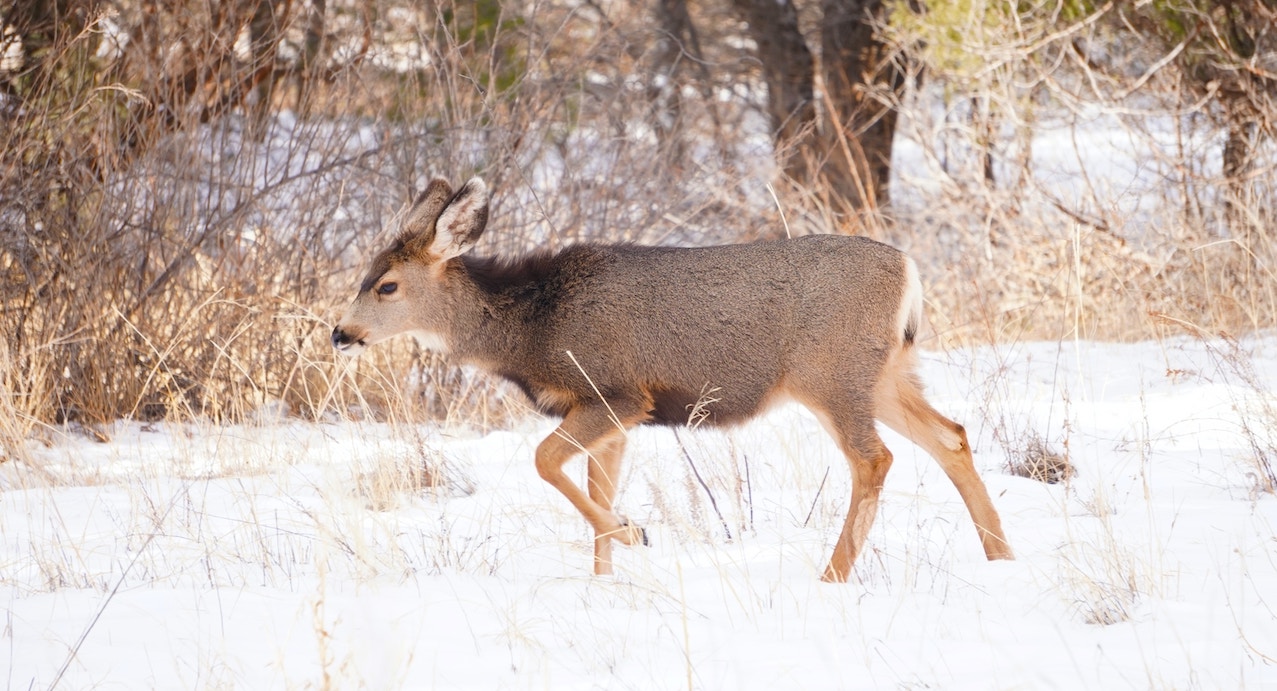
Wild animals are not malicious – they follow food and water. In late winter, deer move down from forests because the snow is too deep further up; rabbits and hares strip bark from young fruit trees because the inner cambium layer is one of the few high-energy foods available. Foxes follow rodents and unsecured rubbish; stray cats follow small mammals and unprotected nesting birds. Once an animal finds a reliable feeding spot, it returns night after night and brings others. The earlier you make the garden uncomfortable, the easier it is to break the cycle before damage accumulates.
1. Motion-Activated Ultrasonic Repellers
For small to mid-sized mammals – rabbits, hares, cats, foxes, martens, badgers – a motion-activated ultrasonic repeller with flashing lights is the most effective standalone device. Unlike birds (which cannot hear ultrasonic frequencies), most mammals hear well into the 20-50 kHz range, and a sudden burst of high-frequency sound combined with a bright LED flash startles them every time. Battery or solar-powered models cover 80-120 m² each, switch on automatically when an animal approaches, and require almost no maintenance. Place one at every entry point along the garden boundary – paths, gaps in hedges, the bottom of fences – and you have a permanent invisible barrier.
2. Solar-Powered Ultrasonic Stations
For larger gardens, smallholdings and orchards, a solar-powered ultrasonic repeller can run unattended for years. The unit charges during the day, emits randomised ultrasonic pulses through the night when most wildlife is active, and never needs new batteries. Solar models are particularly useful in remote spots – at the back of a vegetable patch, around fruit trees, near a chicken coop – where running a power cable would be impractical. Pair with a motion-activated unit at the main entry point for layered protection.
3. Audible Sound Scarers
For larger animals – deer, wild boar, herds of rabbits – and for properties where ultrasonics alone are not enough, an audible bio-acoustic scarer like the Super Birdchaser Plus BG or Super Plus B Sound Bird Scarer covers a much wider area. These units play randomised predator and distress sounds at programmed intervals. Although marketed primarily for birds, the same devices work effectively on garden wildlife when set to the appropriate sound profile, because the recorded predator calls (foxes, large birds of prey, dogs) trigger the same instinctive flight response in deer and rabbits. For a smallholding or large rural garden, one well-placed unit covers 1-2 hectares.
4. Physical Barriers and Tree Guards
Repellents are most effective when combined with physical protection. For young fruit trees, simple plastic or wire mesh tree guards – wrapped around the trunk to a height of about 1.2 metres – are essentially indestructible against rabbit and deer browsing. For vegetable patches, a 1.5-2 metre fence of fine wire mesh keeps rabbits out, while taller deer-rated fencing (1.8 m minimum, ideally 2 m) is needed if deer are common. Strawberry beds and seedling rows benefit from removable mesh tunnels. None of this is glamorous, but it is the only category that works permanently with zero maintenance.
5. Scent and Spray Repellents
Unlike birds, mammals do have a strong sense of smell, which means scent-based repellents can play a useful supporting role. Predator-urine granules (fox, wolf or coyote scent) work for a few weeks against deer and rabbits before needing reapplication. Strong-smelling plants – lavender, rosemary, garlic, marigolds – planted around the perimeter discourage browsing. Bone-meal or chilli-based sprays applied to bark protect young trees in winter when rabbits are most aggressive. Treat scent as a supporting tactic alongside an active deterrent device, not as a complete solution on its own.
Match the Repellent to the Animal
Different animals respond differently:
- Rabbits and hares: motion-activated ultrasonic repellers + tree guards on every young trunk + a wire-mesh fence around the vegetable patch.
- Deer: solar-powered ultrasonic stations + audible sound scarer + 2-metre fencing for high-value areas.
- Foxes and martens: motion-activated repellers near chicken coops, secure bin lids and any small-livestock enclosures.
- Stray cats: motion-activated ultrasonic with light flash, particularly near songbird feeders, fish ponds and seedling beds.
- Wild boar: audible scarer plus strong fencing – ultrasonics alone are usually not enough for large adult boar.
- Birds raiding crops: see our dedicated Crow Control and Starling Control ranges.
Common Mistakes That Waste Money
Most failed wildlife-control attempts share the same errors:
- Buying one device and expecting it to protect a whole garden – coverage areas are real, you usually need two or three units around the perimeter.
- Forgetting that rabbits dig – fences need to be buried at least 20 cm below ground or fitted with an outward-folded mesh skirt.
- Leaving food sources unsecured – windfall fruit, exposed compost and uncovered bins keep wildlife coming back regardless of any repellent.
- Giving up after a few nights – like birds, mammals test new threats before relocating; allow two to three weeks for the deterrent system to take effect.
- Relying only on scent – useful as a supporting tactic, but rain, wind and time wash it away faster than most people expect.
How to Set Up a Layered System
The most reliable approach is the same as professional bird control: layer two or three methods rather than relying on one device. A typical successful garden setup combines a motion-activated ultrasonic repeller at every entry point, a solar-powered station in the centre, physical tree guards on every young trunk, and scent applied around the perimeter at the start of each season. Run the system continuously through the high-pressure months (late winter through early summer) and reduce coverage in autumn when wild food is plentiful. After the first season, wildlife learns the garden is uncomfortable and rarely returns in numbers.
Get Your Garden Wildlife-Free
Whether you are protecting a single fruit tree, a vegetable patch, a smallholding or a country garden, the right repellent setup exists. Browse our full Wildlife Control range – every device has been tested under real European conditions, from rabbit-heavy English orchards to deer-grazed Baltic gardens – and choose the combination that fits your space.
Frequently Asked Questions
How do I keep animals out of my garden?
The most reliable approach is to layer two or three methods rather than relying on one device. Install motion-activated ultrasonic repellers at every entry point, add a solar-powered station in the centre of larger gardens, fit tree guards on every young trunk, and apply scent repellent around the perimeter. For deer and wild boar, add 2-metre fencing on high-value areas. Run the system continuously through late winter and spring when wildlife pressure is highest.
Do ultrasonic animal repellers actually work?
Yes – for mammals. Unlike birds (which cannot hear ultrasonic frequencies), most mammals hear well into the 20-50 kHz range, so motion-activated ultrasonic devices effectively startle rabbits, hares, foxes, cats, martens and badgers. They are less reliable on large adult deer or wild boar, where audible sound scarers and physical fencing work better. Motion-activated models that combine ultrasound with a flash of bright LED light are most effective.
What smell do animals hate the most in the garden?
Predator-urine granules (fox, wolf or coyote scent), strong-smelling plants like lavender, rosemary, garlic and marigolds, and bone-meal or chilli-based sprays all discourage browsing mammals. Scent works far better on mammals than on birds, but rain and wind wash it away within days, so reapplication every one to two weeks is essential. Treat scent as a supporting tactic alongside an active deterrent device – not as a complete solution.
How do I stop rabbits from eating my plants?
The most effective rabbit-control combination is a wire-mesh fence around vulnerable beds (buried at least 20 cm to prevent digging, with an outward-folded skirt at the base), tree guards on every young fruit-tree trunk to a height of 1.2 metres, and a motion-activated ultrasonic repeller at every entry point. Add scent-based repellent around the perimeter for the first few weeks. Once rabbits learn the garden is uncomfortable, they relocate to easier feeding grounds.
How do I keep deer out of my garden?
Deer are large, strong and capable of jumping low fences. Effective deer control requires either 2-metre tall fencing on the most valuable areas, or a combination of solar-powered ultrasonic stations covering the perimeter plus a bio-acoustic sound scarer that plays predator calls at randomised intervals. Tree guards protect young trunks from antler damage and bark stripping. Scent-based predator-urine granules add a useful supporting layer, especially in late winter when deer pressure peaks.
What is the most humane animal repellent?
Every method on this guide is humane and non-lethal. The most humane and effective approach is to make the garden uncomfortable rather than to harm the animal – motion-activated ultrasonics startle without injury, scent repellents discourage browsing, physical barriers prevent access, and audible scarers trigger natural flight responses. Combined, these methods displace wildlife to easier feeding grounds without killing or trapping any animal. They are also the only methods legally permitted across most of the EU and UK without specific licences.