



Choosing the right bird deterrent is harder than it looks. Walk into any garden centre and you will see plastic owls, ultrasonic gadgets and reflective wind-chimes side by side – and most of them barely work. After two decades of installing professional bird-control equipment across Europe, we have a clear view of what actually delivers results in 2026 and what is a waste of money. This guide compares the seven categories of bird control devices that genuinely work, when to use each, and how to choose the right combination for your property.
Do Bird Deterrents Actually Work?
The honest answer: yes, but only the right ones, used correctly. The reason cheap garden-centre devices fail is that birds are intelligent. They test new threats for a few days, and if nothing punishes them for ignoring the device, they accept it as harmless within a week. Effective bird control always relies on one or more of three principles: (1) trigger the bird’s instinctive fear of predators, (2) make landing or perching physically impossible, or (3) introduce unpredictable movement and sound that prevents habituation. Every device in this guide does at least one of those things. Static plastic owls and most ultrasonic gadgets do none of them, which is why they fail.
1. Bio-acoustic Sound Deterrents – Best for Active Roosts
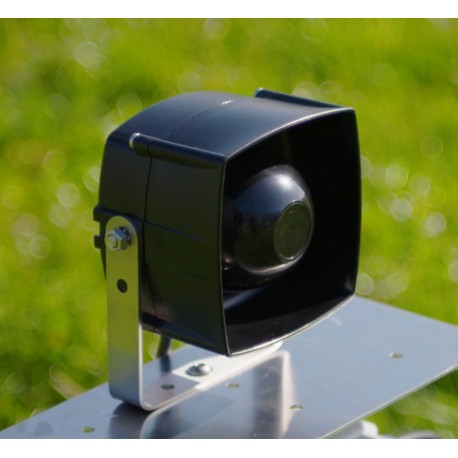
Bio-acoustic scarers play recorded distress calls and predator screams that birds recognise instinctively. When one bird hears another in panic, the entire flock leaves immediately. Modern programmable units randomise calls, intervals and direction, which prevents habituation – a problem that ruins old-fashioned mechanical scarecrows. Sound is the fastest path to results when you are dealing with an established roost of crows, gulls, starlings or pigeons. Coverage ranges from 1-2 hectares (residential and small business) to 3-4 hectares (agricultural). For a fully programmable, weatherproof scarer, this is the single most powerful tool in the kit.
Best for: existing flocks on roofs, in barns, on terraces, in vineyards, orchards and on airfields.
2. Predator Decoys and Eagle Kites – Best for Open Areas
Birds have hard-wired fear of birds of prey. A high-quality 7-metre eagle kite mounted on a telescopic pole soars in the wind and casts a hawk-shaped shadow over a wide area. For smaller properties, a 5-metre kite works well. Lifelike feathered owl, hawk and dead-crow effigies (used upside down) trigger the same instinct at closer range. The key is movement and rotation – relocate decoys every two or three days so birds cannot habituate. Used alongside a sound device, decoys make any open area feel actively hostile to birds.
Best for: orchards, vineyards, large gardens, sports pitches, fish farms, harbours.
3. Bird Spikes – Best for Permanent Perching Problems
Where birds repeatedly land on the same ledge, ridge, sign, gutter or chimney, stainless steel bird spikes are the install-once-and-forget answer. They make landing impossible without injuring the bird. Marine-grade stainless lasts more than ten years even in salt-air coastal conditions. Choose spike width by target species – narrower spikes for pigeons and starlings, wider variants for gulls and crows. Spikes are unobtrusive after installation; most people walking past never notice them.
Best for: rooflines, ledges, signs, gutters, parapets, beams.
4. Anti-Perching Spinners (Daddi Long Legs)
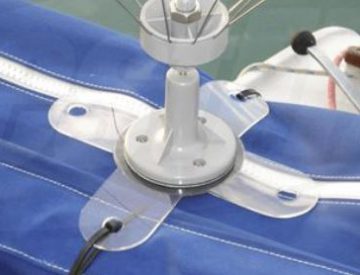
For flat roofs, balconies and large open surfaces, the spinning Daddi Long Legs design is the gold standard. A central post with weighted, flexible stainless arms rotates gently in the wind and sweeps the surface, making safe landing impossible. One unit covers a circle of up to 4.5 metres in radius. It is mainly used for gulls, but works equally well against crows, pigeons and other roof-roosting birds. No power required, weatherproof for years.
Best for: flat commercial roofs, boats, large signage, warehouse parapets.
5. Bird Netting and Wire Systems
For courtyards, balconies, atria, warehouse openings, fish ponds, vineyards and rooftop equipment, anti-bird netting is the only way to physically exclude birds. UV-stabilised netting is virtually invisible from a distance and lasts a decade or more. Tensioned post-and-wire systems on flat parapets prevent landing without spoiling architectural lines and are popular on heritage buildings, hotels and restaurants. Netting is an investment, but it is the only category that works permanently with zero maintenance.
Best for: openings, balconies, fish ponds, rooftop AC units, vineyard rows.
6. Automated Bird-Scaring Lasers
Modern automated lasers are perceived by birds as a physical threat – they leave the area immediately. Lasers are uniquely effective at dawn and dusk when birds are arriving at or leaving the roost, and inside warehouses, hangars and barns where other deterrents are difficult to install. Programmable timers let you target only the active hours. For sensitive sites where noise is unwelcome (offices, near hospitals, residential areas), lasers are the silent solution.
Best for: warehouses, harbours, indoor spaces, urban sites where noise is restricted.
7. Propane Cannons and Agricultural Scarers
For large open farmland – vineyards, fruit orchards, grain fields, sunflower fields and fish farms – a propane gas cannon mounted on a 360-degree tripod produces periodic detonations that no bird tolerates. Combined with an audio scarer covering 3-4 hectares, even the largest flocks of crows, starlings or geese are displaced quickly. These devices are robust, weatherproof, and built for unattended seasonal use. Not suitable for residential areas due to noise levels.
Best for: orchards, vineyards, grain crops, fish farms, airfields.
Match the Device to the Bird
Not every deterrent works equally on every species. As a rough guide:
- Pigeons and starlings: spikes, netting, sound deterrents – see Pigeon Control and Starling Control.
- Crows, magpies and corvids: sound deterrents, predator decoys, lasers – see Crow Control.
- Gulls: Daddi Long Legs spinners, sound, netting – see Seagull & Gull Control.
- Herons: ponds need netting and decoys – see Heron Deterrent.
- Woodpeckers: reflective deterrents and visual scaring – see Woodpecker Deterrents.
- Migratory crop-raiding flocks: agricultural sound scarers and gas cannons.
What About Fake Owls and Ultrasonic Gadgets?
Static plastic owls do not work. Birds identify them as fake within 48 hours. They can be useful only as a small part of a rotating decoy system, never on their own. Ultrasonic devices are even worse – birds hear in roughly the same frequency range as humans, so “ultrasonic bird repellents” emit sounds the birds cannot even register. If a product page promises bird control through ultrasound, walk away. Audible distress-call scarers work; ultrasonics do not.
How to Combine Devices for Permanent Results
The single biggest mistake people make is choosing one device and expecting it to do all the work. Birds adapt to anything they see daily. The professionals always layer methods: a sound scarer to disrupt the roost in the first three weeks, a physical barrier (spikes, Daddi Long Legs, netting) on the favoured perching surfaces, a moving visual deterrent (kite, reflective tape) for unpredictability, and removal of any food source the birds were exploiting. Used together, this combination delivers permanent results in two to three weeks, with only minor refresh needed seasonally.
Where to Start
If you are unsure which device fits your situation, the simplest approach is to identify the species first, then pick the matching category. Browse the full Bird Busters product range – every device has been tested on real installations across Europe, from residential roofs to commercial harbours and agricultural sites. Choose one sound device, one physical deterrent and one visual scarer, layer them, and you will solve in two months what a plastic owl never could.
Frequently Asked Questions
What is the best bird deterrent?
There is no single ‘best’ bird deterrent – the right choice depends on the species, the location and whether you have an existing flock or are preventing a problem. For an active roost, a bio-acoustic sound deterrent is the fastest tool. For permanent perching problems, stainless-steel bird spikes or a Daddi Long Legs spinner are unbeatable. For large open areas, an eagle kite plus a sound scarer covers a hectare or more. The professionals always layer two or three devices for permanent results.
Do bird repellents actually work?
Yes – but only the right ones. Static plastic owls and ultrasonic gadgets do not work because birds identify them as harmless within days, or simply cannot hear ultrasonic frequencies. Effective bird control relies on bio-acoustic distress calls, predator decoys with movement, physical barriers (spikes, netting, Daddi Long Legs) and lasers. Used in combination and rotated regularly, these methods deliver permanent results in two to three weeks.
How to scare birds away permanently?
Permanent results come from layering methods rather than relying on one device. A typical professional setup combines a programmable sound deterrent (to break up the existing roost), a physical barrier on every favoured perch, a moving visual scarer (kite or reflective tape rotated every two to three days), and removal of any food source. After two to three weeks of consistent use the birds relocate, and a brief seasonal refresh prevents new birds from settling in.
Do fake owls really scare birds?
Static plastic owls do not work – birds identify them as fake within 48 hours and start ignoring them. Lifelike feathered decoys can work briefly, but only when combined with movement (mounting on a swivel base, relocating every few days) and other deterrents. The instinct to fear predators is real, but birds quickly learn that an owl which never moves and never strikes is not a threat. Use decoys as part of a rotating system, not on their own.
What is the most effective bird repellent?
Bio-acoustic sound deterrents that play randomised distress calls and predator screams are the most effective tool for an established flock. Within days, the entire roost relocates. For permanent prevention on a specific surface (a roof, a ledge, a chimney), stainless-steel bird spikes or Daddi Long Legs spinners are the most effective physical solution. The single most effective overall strategy is to combine one sound device with one physical deterrent and refresh visual scarers regularly.
Are ultrasonic bird repellents effective?
No. Birds hear in roughly the same frequency range as humans, which means truly ultrasonic frequencies are inaudible to them. Devices marketed as ‘ultrasonic bird repellents’ simply emit sound the target birds cannot register, so they have no effect. Audible bio-acoustic deterrents that play species-specific distress calls and predator screams do work – but they are categorically different products. If a device claims to repel birds through ultrasound, do not buy it.