




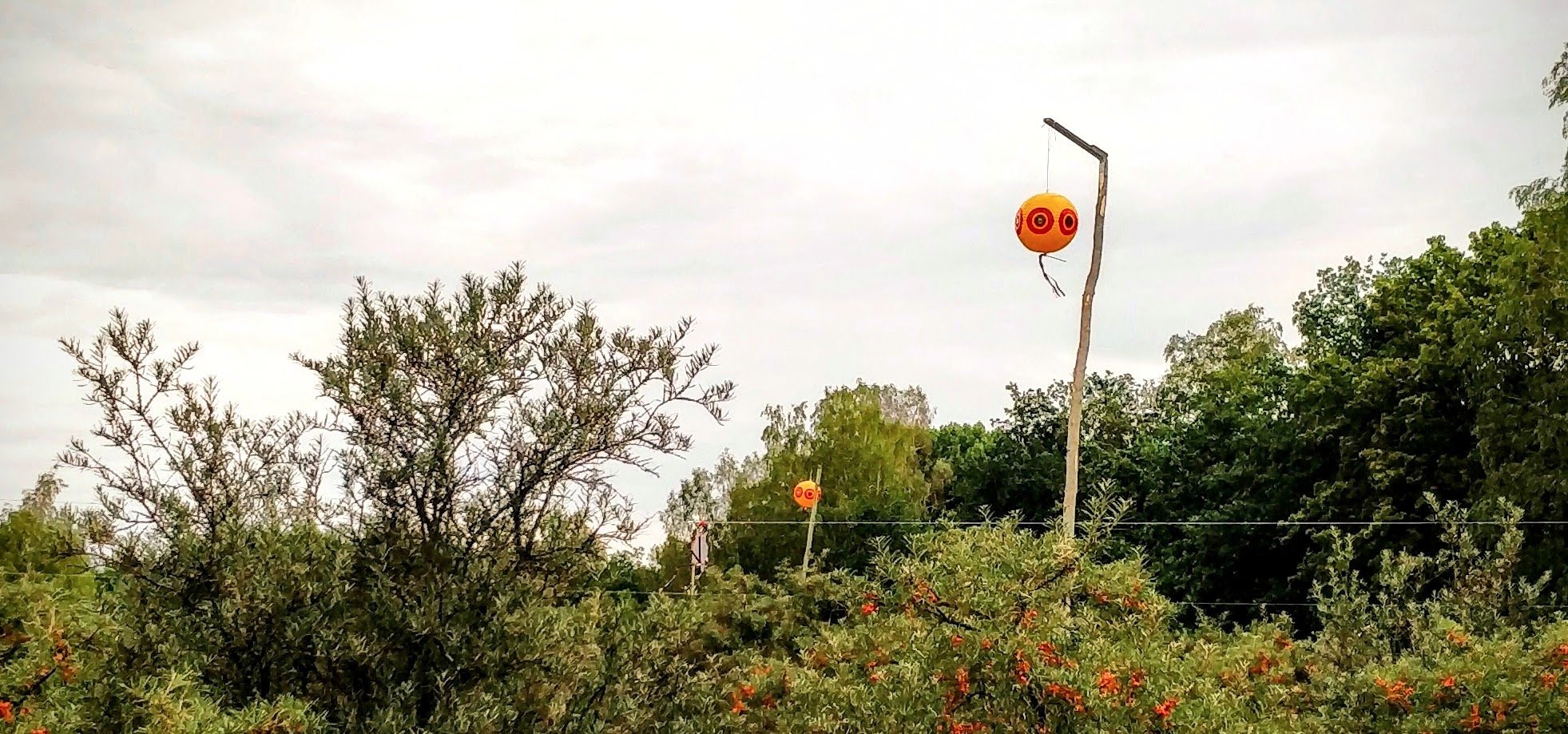
“When a flock of starlings and crows fly over a sea buckthorn field, they can eat up to 500 kilograms of berries in one day. At first they gobble up all the berries from the top, and then they start eating the bottom ones.”
That description comes from Peeter Enning of Sella Farm in Pärnu County, who has spent years protecting one of Estonia’s largest sea buckthorn plantations from autumn migration flocks. Sea buckthorn is the most extreme example, but the same problem affects every commercial berry grower in Northern and Central Europe – blueberries, blackcurrants, raspberries, cherries, gooseberries, saskatoon and elderberries are all stripped by birds at the very moment they reach peak ripeness. If you grow berries commercially or run a serious smallholding, knowing how to protect berries from birds is the difference between a profitable harvest and a stripped row of bare twigs. Here is what works in 2026.
Why Berry Crops Are So Vulnerable
Birds have evolved alongside fruiting plants for millions of years. The brightest, ripest berries on the bush are visible from a distance and signal an easy meal. Migrating flocks of starlings, blackbirds, thrushes, fieldfares and corvids time their movements to coincide with the peak ripening period of the most energy-dense fruits. A flock of 200 starlings can clear a half-hectare blueberry block in two days. Sea buckthorn, with its dense clusters of orange berries, is so visually obvious it draws birds from kilometres away.
The Real Cost of Doing Nothing
Most berry growers underestimate losses until they measure them. Studies on commercial blueberry farms record routine bird damage of 20-40 % of marketable yield in unprotected fields, rising to 80 % or more during heavy migration years. For a smallholding running 2 hectares of mixed berries, that is the difference between a profitable season and a year’s wasted labour. The investment in proper bird control pays for itself in a single harvest, often several times over.
1. Bird Netting: The Only 100 % Solution
For high-value crops on a defined area, fine-mesh anti-bird netting is the only method that fully eliminates damage. UV-stabilised netting (12-25 mm mesh) is small enough to keep out even the smallest blackbird, large enough for pollinators to pass through. Drape it over a frame of bamboo canes for raspberries and blackcurrants, build a permanent walk-in fruit cage for high-value soft fruit, or run tunnel-shaped frames over rows of strawberries. Properly tensioned netting lasts a decade. The upfront cost is real, but for any commercial berry operation it is the single best investment you will make.
2. Bio-acoustic Sound Scarers
For larger fields where netting is impractical – orchards, sea buckthorn plantations, cherry blocks, vineyards – programmable agricultural sound scarers like the AgriPro 3 Ha or AgriPro 4 Ha cover the entire crop from a single device. The unit plays randomised distress calls and predator screams that the target species recognise instinctively – when one starling hears another in panic, the entire flock leaves immediately. Modern programmable models randomise calls, intervals and direction so the birds cannot habituate. For most berry farms, one device per 3-4 hectares covers the operation through the entire ripening window.
3. Eagle Kites and Visual Predator Scarers
A 7-metre eagle kite mounted on a telescopic pole soars in the wind and casts a hawk-shaped shadow across hectares of crop. Birds have an instinctive fear of birds of prey, and the moving silhouette triggers an immediate flight response. For sea buckthorn, blueberry and elderberry fields, the eagle kite is a classic supporting deterrent – combined with sound scarers, it dramatically increases coverage and prevents the predictability that pure-audio installations sometimes create. Move the pole every two to three days so the resident flock cannot adjust to its position.
4. Reflective Tape Between Rows
The cheapest layer in the system. Holographic mylar tape strung between fence posts or tied along the edge of every other row creates unpredictable flashes of light. Birds find the visual disturbance unsettling. Replace the tape every two months as the foil weathers. On a 2-hectare berry field, a few hundred metres of mylar costs almost nothing and adds genuine value as a supporting layer.
5. Propane Cannons for Large Open Fields
For large commercial sea buckthorn plantations and other extensive berry crops on open land, an electronic propane cannon mounted on a 360-degree tripod produces periodic detonations that no migrating flock will tolerate. Combined with a sound scarer, this is the agricultural-grade solution for the most heavily targeted operations. Cannons are not suitable for residential areas due to noise levels, but on remote farmland they are unbeatable.
The Layered Approach for Berry Farms
The professionals never rely on one device. A typical successful berry-farm setup combines:
- One sound scarer per 3-4 hectares, programmed to run only during the active hours of the target species.
- One eagle kite or visual decoy per hectare, relocated every two or three days.
- Reflective mylar tape along every second row, replaced quarterly.
- Netting on the highest-value sections (early-ripening rows that attract scouts who then bring the flock).
- For large open fields: a propane cannon adding the noise dimension that distress calls alone cannot replicate.
This combination, in place from a week before ripening through to the end of harvest, eliminates 90 %+ of bird damage on most commercial berry crops.
Timing: When to Install
The single biggest mistake berry growers make is installing deterrents too late. By the time you see birds in the field, scouts have already mapped the crop and the flock is on its way. Install sound scarers, kites and reflective tape at least one week before the earliest berries colour up. Birds that arrive to find the field already hostile relocate to easier feeding grounds. Birds that arrive to find a quiet field, then meet deterrents only on day three of feeding, simply tolerate the noise because they have already committed to the food source.
Match the Setup to Your Crop
- Strawberries (low-growing): netting tunnels, supplemented with reflective tape – see Starling Control for the main raiding species.
- Raspberries, blackcurrants, gooseberries: walk-in fruit cage with permanent netting.
- Blueberries: drape netting on a frame, plus sound scarer for larger blocks.
- Cherries (tree fruit): drape fine netting over the canopy in the week before ripening, plus eagle kite.
- Sea buckthorn: sound scarer + propane cannon + eagle kite (the heavy artillery – sea buckthorn fields attract the most aggressive flocks).
- Elderberry, saskatoon, rowan: sound scarer + reflective tape, netting only on the most exposed rows.
Protect the Harvest, Protect the Business
For commercial berry growers, bird control is not optional – it is the difference between a profitable season and a wasted one. Whether you run a half-hectare smallholding or a 50-hectare sea buckthorn plantation, the right combination of netting, sound scarers, kites and (where appropriate) propane cannons protects the harvest from the migrating flocks that arrive at peak ripening. Browse the full agricultural bird control range – every device has been tested on real berry farms across Northern and Central Europe.
Frequently Asked Questions
How do I protect my berries from birds?
For high-value crops, fine-mesh anti-bird netting is the only method that gives 100 % protection. Drape it over a frame for raspberries and blackcurrants, build a permanent walk-in fruit cage for soft fruit, or run tunnel-shaped frames over strawberry rows. For larger fields where netting is impractical, combine a programmable bio-acoustic sound scarer (one per 3-4 hectares) with an eagle kite and reflective mylar tape. The layered approach eliminates 90 % or more of flock damage.
Which birds eat the most berries?
The biggest berry pests across Europe are starlings, blackbirds, fieldfares, thrushes, jackdaws, crows and wood pigeons. Starlings move in flocks of hundreds and can clear a half-hectare blueberry block in two days. Sea buckthorn fields are particularly vulnerable to mixed flocks of starlings and crows – a single flock can eat up to 500 kg of berries in one day. Migrating flocks are the most damaging because they arrive in numbers and habituate within hours rather than days.
When should I install bird deterrents on my berry crop?
At least one week before the earliest berries colour up. Birds that arrive to find the field already hostile relocate to easier feeding grounds. Birds that arrive to find a quiet field and then meet deterrents only on day three of feeding simply tolerate the noise because they have already committed to the food source. Timing is the single most important factor in commercial bird control – install before migration arrives, not after.
Does bird netting affect pollination?
No, when sized correctly. UV-stabilised netting with 12-25 mm mesh is small enough to keep out even the smallest blackbird, but large enough for honeybees, bumblebees and most other pollinators to pass through freely. The netting is typically installed only at the ripening stage, well after blossom and pollination have finished, so even tighter mesh sizes have no effect on fruit set. Properly installed netting protects the crop without harming the pollinator population.
How much do bird deterrents cost for a commercial berry farm?
For a 2-hectare mixed berry operation, a typical professional setup (one bio-acoustic sound scarer, one eagle kite, mylar tape, netting on the highest-value rows) costs €1,500-3,000 upfront and lasts 8-10 years with minor seasonal refresh. Most commercial growers report that the equipment pays for itself within the first season – bird damage on unprotected fields routinely runs 20-40 % of marketable yield, with peak migration years exceeding 80 % losses on attractive crops.
Can I scare birds away from a sea buckthorn plantation?
Yes, but sea buckthorn fields face the most aggressive flock pressure of any commercial berry crop because the dense clusters of bright orange berries are visible from kilometres away. The professional setup combines an agricultural sound scarer (3 Ha+ coverage), a propane gas cannon on a 360-degree tripod for the largest migrations, an eagle kite for visual deterrence and reflective mylar tape along every second row. Used together, this protects sea buckthorn even during heavy autumn migration.